Positano
Classy and genuine
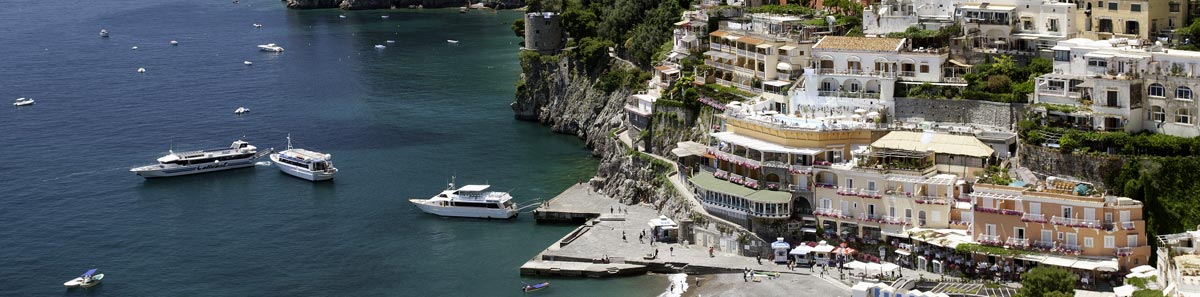
According to the legend, Positano was founded by
a group of inhabitants from Paestum who were escaping the attack
of some Saraceni (pirates of the time).
The first official information about the town's existence comes
from ancient Roman documents, but some artifacts from the Palaeolithic
Era have also been found here. These artifacts testify to
a much more ancient origin of the settlement.
The town of Positano is located in one of the most beautiful valleys
of the Amalfi Coast, and the valley opens up to an equally magnificent
stretch of coastline. At the center of town you can see the brightly
colored "maiolica" dome of Santa Maria Assunta, the main
church of Positano. As well as completing the picturesque view of
this Southern Italian town, the church is also a very important
part of daily life for many locals. Inside the church features a collection of intriguing works of art from
the XIII and XVI century.
Positano has a very glamorous side to it, because of the well-known
"Positano fashion style." Just one of the many
reasons for tourists from all over the world flock to the pathways
and boutiques of Positano each summer.
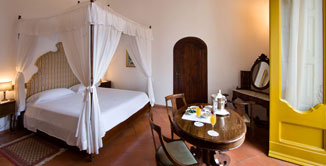
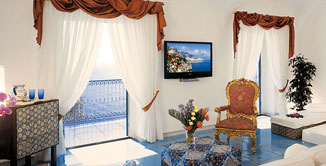
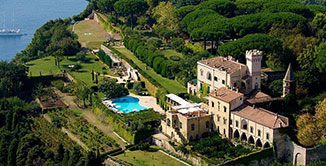
With it's beauty, luxurious hotels, bars, restaurants, and boutiques,
Positano is surely a perfect place to discover the charm of the Amalfi Coast.

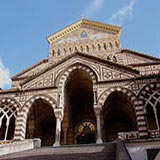
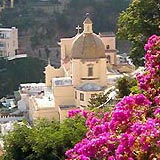
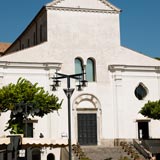
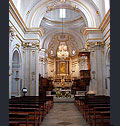 The church of Santa Maria Assunta, is located right
in the center of Positano, in the small Flavio Gioia square. With
its decorative, colourful, dome of Vietri maiolica (tiles), the
church is a typical example of the architecture found in this beautiful
area. The church is divided into three "navate" which are decorated
with stucco, and gold ornamentation. Inside the church there is
a collection of important works of art, like the "Circoncisione"
by Fabrizio Santafede (from the end of '600), and the famous Bizantine
wooden panel, depicting the Virgin Mary and Her Child. The town's
name Positano (which means "put it there" in latin), derives
from the story of this panel. The ancient legend tells that the icon was stolen by the Saraceni
(pirates of the time), but when the pirates tried to leave Positano's
Shore with the panel, a terrible sea storm suddenly arose, and
prevented their passage. During the storm, the pirates heard a cry
from heaven saying: "posa, posa" (put it back). The fearful
pirates set the decorated panel back on Positano's Shore, and miraculously,
the storm ceased giving them the opportunity to flee the Coast.
The church of Santa Maria Assunta, is located right
in the center of Positano, in the small Flavio Gioia square. With
its decorative, colourful, dome of Vietri maiolica (tiles), the
church is a typical example of the architecture found in this beautiful
area. The church is divided into three "navate" which are decorated
with stucco, and gold ornamentation. Inside the church there is
a collection of important works of art, like the "Circoncisione"
by Fabrizio Santafede (from the end of '600), and the famous Bizantine
wooden panel, depicting the Virgin Mary and Her Child. The town's
name Positano (which means "put it there" in latin), derives
from the story of this panel. The ancient legend tells that the icon was stolen by the Saraceni
(pirates of the time), but when the pirates tried to leave Positano's
Shore with the panel, a terrible sea storm suddenly arose, and
prevented their passage. During the storm, the pirates heard a cry
from heaven saying: "posa, posa" (put it back). The fearful
pirates set the decorated panel back on Positano's Shore, and miraculously,
the storm ceased giving them the opportunity to flee the Coast.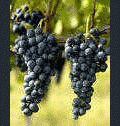 Local wines of Campania are Falanghina, Fiano, and Greco di tufo, in the whites' department, while the region's reds are the Aglianico, which is named after its grape like Falanghina, the Taurasi, the Per'e Palummo, and the Lacrima Cristi (Christ's tear). The original grapes used to make these wines originally came from Greece, together with the know-how to grow them and to turn them into wine. The whites of the area are quite fruity and fresh, and they ideally go with fish and sea-food. While the Aglianico, Per'e Palummo, and Lacrima Cristi are robust reds with a subtle scent which accompany cured meats, ham and salame, and typical cheese such as caciocavallo, provolone, and provola affumicata (smoked cheese). The Taurasi instead stands out among the region's reds as the special reserve. In the last two decades the wine makers of Campania have generally improved their production process, and added a few new numbers to their repertoire such as rosè, passitos, and a few sparkling proseccos. Make sure you taste them if you visit the Amalfi Coast.