Minori
Off the beaten path
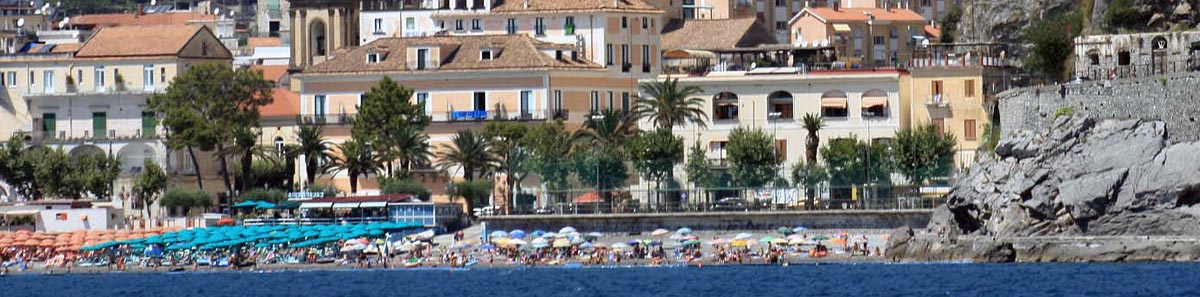
Minori is a very characteristic Amalfi Coast town.
Its name derives from the ancient latin name "Rheginna Minor"
that came from the river Rheginna, which still runs through its valley.
Like other major towns of the Amalfi Coast Minori was founded by
ancient roman aristocrats who chose the place for its beauty and
mild climate, and built their luxurious villas here.
Minori soon started to produce paper, liquors and other lemon specialties,
since lemons are a typical product of this area. This production
is still a main activity of the town and is carried on with strict
respect of the genuine local tradition.
If you come to Minori make sure you visit the ancient roman villa
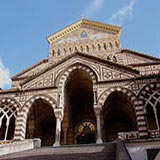
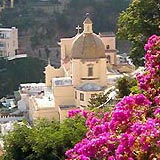
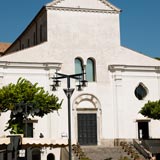
and the Basilica of Santa Trofimena, and the churchs of Santa Lucia,
San Gennaro and San Michele. These are great examples of southern italian
architecture.


 The official discovery of this ancient Roman villa
was in 1932 when some workers found a large room, decorated with
Roman frescoes, during the renovation of a flat located just above
the villa. The villa belonged to a Roman aristocrat, probably from the emperor's
entourage, and was built during the time of the Giulio-Claudia era
(14-68 A.C.). At this time, there was a small community of Roman
villas on the Amalfi Coast, that were connected via the sea, and could communicate through the many guard-towers built along the coastline. The water supply for the villa's large pool, and all other necessities
of the residence were drawn from the Regina Minor river. The river,
with passing time, eventually buried the villa, hiding it from the
researchers of this area. The upper level of the villa was completely lost from erosion, but
the entire lower part is perfectly kept and preserved. It consists
of a "viridarium" (garden) with an open air pool,
a porch, and a collection of wide rooms. The most important of the
rooms was the "triclinio" (ancient dining room), here
you can still see frescoes, and the mosaic tiled floor. The upper
level was replaced with an "antiquarium" (archaeological museum) in the
1950's.
The official discovery of this ancient Roman villa
was in 1932 when some workers found a large room, decorated with
Roman frescoes, during the renovation of a flat located just above
the villa. The villa belonged to a Roman aristocrat, probably from the emperor's
entourage, and was built during the time of the Giulio-Claudia era
(14-68 A.C.). At this time, there was a small community of Roman
villas on the Amalfi Coast, that were connected via the sea, and could communicate through the many guard-towers built along the coastline. The water supply for the villa's large pool, and all other necessities
of the residence were drawn from the Regina Minor river. The river,
with passing time, eventually buried the villa, hiding it from the
researchers of this area. The upper level of the villa was completely lost from erosion, but
the entire lower part is perfectly kept and preserved. It consists
of a "viridarium" (garden) with an open air pool,
a porch, and a collection of wide rooms. The most important of the
rooms was the "triclinio" (ancient dining room), here
you can still see frescoes, and the mosaic tiled floor. The upper
level was replaced with an "antiquarium" (archaeological museum) in the
1950's.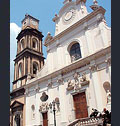 This Basilica was built around the time of '700 on the original basement of an ancient Romanic church. In the Basilica, specifically on the main altar, the remains of Santa Trofimena are kept in an urn. Santa Trofimena is the patron saint of Minori, and is a very important saint for all of the Amalfi Coast Communities and catholic people of the Amalfi coast. The Basilica also features several works of art, such as the "Crocifissione" by Marco Pino da Siena (an Italian Manierista), as well as a collection of paintings found in the minor chapels, like the "Madonna del Rosario" and a few others.
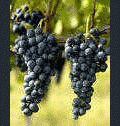 Local wines of Campania are Falanghina, Fiano, and Greco di tufo, in the whites' department, while the region's reds are the Aglianico, which is named after its grape like Falanghina, the Taurasi, the Per'e Palummo, and the Lacrima Cristi (Christ's tear). The original grapes used to make these wines originally came from Greece, together with the know-how to grow them and to turn them into wine. The whites of the area are quite fruity and fresh, and they ideally go with fish and sea-food. While the Aglianico, Per'e Palummo, and Lacrima Cristi are robust reds with a subtle scent which accompany cured meats, ham and salame, and typical cheese such as caciocavallo, provolone, and provola affumicata (smoked cheese). The Taurasi instead stands out among the region's reds as the special reserve. In the last two decades the wine makers of Campania have generally improved their production process, and added a few new numbers to their repertoire such as rosè, passitos, and a few sparkling proseccos. Make sure you taste them if you visit the Amalfi Coast.